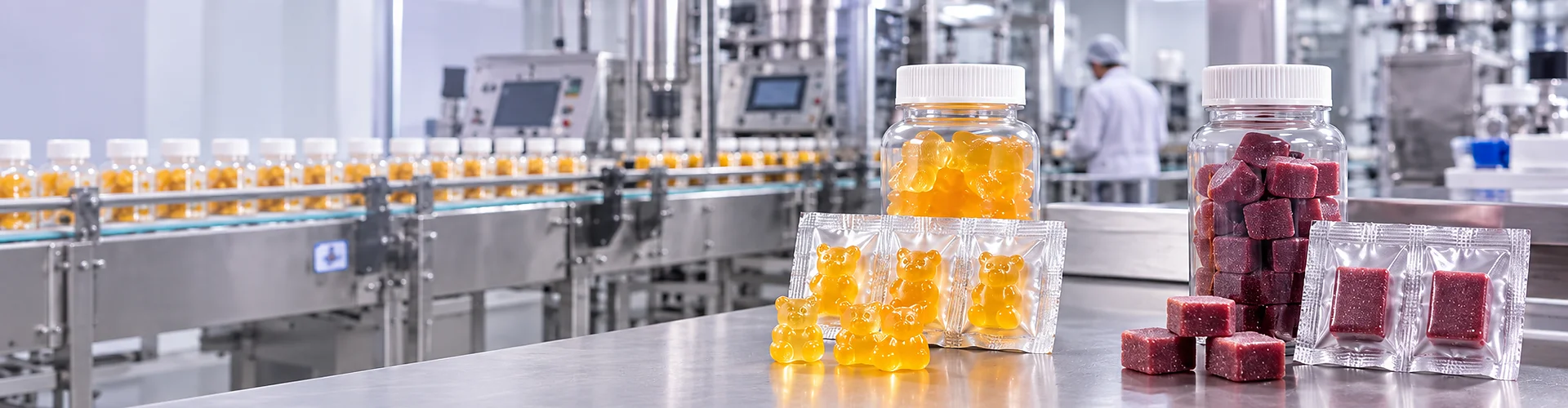
Collagen Powder vs Gummies vs Soft Chews: How Much Collagen Can Each Format Carry?
Collagen is a gram-level ingredient. That makes the dosage form a central part of the product proposition.
A powder can carry 5g, 10g, or more in a scoop or stick. A gummy must share its unit weight with the gel system, sweeteners, water, acids, flavors, and other actives. A soft chew can support a higher powder proportion than a conventional gummy, but it must remain cohesive, pleasant to chew, stable, and commercially manufacturable.
The correct comparison is not “Which format is more premium?” It is “Which format can deliver the intended collagen amount in a serving the consumer will use consistently?”
Quick Answer
Start With the Target Serving
At a practical planning level:
-
A 2g serving can fit several format strategies, including gummies or high-load chews
-
A 5g serving strongly favors powder or a purpose-built high-load chew; gummies usually require multiple large pieces
-
A 10g serving is most efficient as powder or another high-volume format
These are not universal manufacturing limits. Feasibility depends on the collagen material, peptide profile, bulk density, taste, gummy or chew base, unit weight, serving count, other actives, processing equipment, and package.
The manufacturer should calculate the complete serving mass and show the target-dose prototype before the brand approves the format.
Define the Collagen Material
“Collagen” Is Not One Standard Powder
The project brief should identify:
-
Source, such as bovine, marine, porcine, or poultry
-
Hydrolyzed collagen or other specified material
-
Manufacturer and country of origin
-
Protein or collagen specification
-
Molecular-weight or peptide information where relevant
-
Flavor, odor, color, and particle properties
-
Allergen and dietary-positioning implications
-
Proposed amount per serving
Marine collagen can support a different brand story from bovine collagen, but it also creates fish-allergen and sensory considerations. Different hydrolysates can vary in odor, bitterness, color, density, and hydration.
Do not assume that two powders with the same protein result will behave identically in a gummy, drink, or chew.
Powder Format
Highest Dose Capacity With Flexible Serving Size
Powder is the most direct format for gram-level collagen. A scoop or stick can carry the collagen plus flavors, acids, sweeteners, vitamin C, minerals, beauty-positioning ingredients, or other proteins.
Powder suits products targeting:
-
5g to 10g or larger servings
-
Daily beverage rituals
-
Multi-ingredient beauty or protein blends
-
Flexible flavor systems
-
Tubs, jars, or stick packs
Technical work still matters. Collagen can contribute odor, bitterness, foaming, haze, sediment, or a distinctive mouthfeel. The formula should be tested at the intended serving size and dilution.
Powder Consumer Experience
Dose Efficiency Comes With Preparation
A powder serving requires opening, measuring or tearing a stick, mixing, and drinking. This can fit a morning beverage or beauty routine, but it is less convenient for consumers who want a ready-to-use supplement.
Evaluate:
-
Serving weight and scoop size
-
Water volume and temperature
-
Dissolution or dispersion time
-
Foam and sediment
-
Flavor strength and aftertaste
-
Stick-pack or tub portability
-
Moisture protection and clumping
A small scoop is not automatically better. If the flavor system is too compressed, the product may taste strongly of protein or sweetener.
Conventional Gummy Format
Collagen Competes With the Gel Structure
A gummy requires enough continuous phase to set, deposit, dry, and remain chewable. Adding collagen can change viscosity, gel formation, moisture retention, color, and flavor.
At higher load, common risks include:
-
Thick slurry and difficult depositing
-
Weak or inconsistent set
-
High unit weight
-
Dense, rubbery, or powdery texture
-
Protein odor and bitterness
-
Browning or color change
-
Slow drying or sticky surfaces
-
Shorter sensory shelf life
A brand targeting 2g collagen per serving may need several gummies. A 5g or 10g target can require a serving mass that no longer feels like a conventional supplement gummy.
Gummy Positioning
Lower Dose Can Still Be Commercially Coherent
A collagen gummy does not need to imitate a 10g powder if it is positioned honestly. It can be a convenient beauty-support product with a defined collagen amount and complementary ingredients.
The brand should avoid hiding a small collagen contribution behind a long ingredient list or visually implying equivalence to a full powder serving.
Useful questions include:
-
Is collagen the hero ingredient or one part of a beauty formula?
-
How many gummies will consumers take?
-
What is the tested amount per serving?
-
Does the retail price reflect the delivered grams?
-
Are claims appropriate for the market and evidence?
Transparent dose communication can make a lower-load gummy credible even when it serves a different use case from powder.
Soft-Chew Format
Higher Powder Load With a Different Eating Experience
Soft chews can be engineered around a dense active phase. They are not required to maintain the translucent, elastic structure of a traditional gummy.
Potential advantages include:
-
More collagen per piece
-
Fewer units per serving
-
A snack-like, confectionery chew
-
Greater room for high-load combinations
-
Cold-processed or lower-heat routes on suitable platforms
However, collagen can still affect cohesion, chew resistance, crumbling, surface condition, and flavor. A high-load chew may require fibers, syrups, fats, binders, humectants, flavors, and moisture controls that substantially influence the final serving mass.
Comparing 2g, 5g, and 10g Targets
Two Grams
Two grams can fit gummies when the brand accepts a multi-piece serving and the formula remains manufacturable. It can also fit one or two high-load chews depending on unit design. Powder easily carries the dose.
Five Grams
Five grams is efficient in powder. It may fit two or more purpose-built soft chews. Conventional gummies are likely to require multiple large units and significant total serving mass.
Ten Grams
Ten grams strongly favors powder, a large-format gel or jelly, or another high-volume delivery system. A gummy or soft-chew serving can become bulky, expensive, and difficult to consume.
These comparisons should be confirmed with the actual material and platform, not used as guaranteed thresholds.
Collagen Plus Other Beauty Ingredients
Every Addition Uses Space and Changes Risk
Vitamin C, biotin, zinc, hyaluronic acid, ceramides, botanical extracts, or flavors can support a beauty concept, but they also add mass, interactions, taste, analytical complexity, and label responsibilities.
At a 5g collagen target, small-dose actives may fit without changing the format. Mineral compounds or additional gram-level ingredients can push the product toward powder or a larger chew.
Do not add ingredients only to create a longer Supplement Facts panel. Define the consumer problem, intended serving, evidence, and dosage-form capacity first.
Taste and Flavor Development
Approve the Full-Dose Version
Collagen materials can contribute animal, marine, broth-like, bitter, or lingering notes. The sensory challenge grows with dose.
Fruit, berry, tropical, citrus, creamy, or confectionery systems can work depending on material and format. The manufacturer should evaluate acid, sweetness, salt, aroma, color, and aftertaste together.
Do not approve a low-collagen flavor screen and assume the 5g commercial formula will taste the same. The target-dose sample is the relevant product.
For powder, evaluate the actual dilution. For gummies and chews, evaluate texture and flavor after storage, not only on the production day.
Processing and Stability
Protein Quality and Physical Quality Must Both Be Considered
The product can change through heat, moisture, oxygen, pH, and time. Relevant attributes may include active or protein content, microbiology, moisture, water activity, color, odor, taste, texture, dissolution, and package integrity.
Gummies and chews can harden, soften, stick, dry, or develop flavor changes. Powders can clump, absorb odors, or lose flow.
Published collagen studies do not establish the shelf life of a commercial supplement. Stability evidence must relate to the actual material, formula, process, and package.
Finished-Product Verification
Define What the Test Result Means
Protein, hydroxyproline, nitrogen, peptide profile, or supplier-specific marker methods may answer different questions. The testing plan should identify the intended claim, analyte, method, matrix, reporting basis, and acceptance criterion.
A general protein result may include protein from other ingredients. It does not automatically prove that all measured protein is the specified collagen material.
Use qualified raw-material documentation, controlled weighing and production records, representative finished-product sampling, and suitable methods together.
If collagen is the hero ingredient, the brand should understand exactly how the finished amount will be supported.
Packaging and Cost
Compare Cost per Delivered Gram and Serving
Powder packaging may use a tub, pouch, scoop, or printed stick. Gummies require bottles or pouches with sufficient count. Soft chews may need individual wraps or protective configurations.
Compare:
-
Collagen grams per serving
-
Servings per package
-
Total formula mass
-
Units per serving
-
Packaging and freight volume
-
Manufacturing yield
-
Testing and stability cost
-
Retail price per serving and per gram
A gummy bottle can look less expensive while delivering far fewer grams of collagen than a powder tub. Both can be viable, but they should not be compared without normalizing the dose.
Format Decision Checklist
-
Collagen source and specification defined
-
Target grams per serving locked
-
Maximum units or scoop size set
-
Other actives ranked by importance
-
Full-dose sensory sample approved
-
Commercial equipment feasibility reviewed
-
Finished-product verification route defined
-
Physical stability attributes selected
-
Packaging configuration tested
-
Cost compared per serving and delivered gram
How VitaMFG Reviews Collagen Formats
Match the Format to the Intended Collagen Contribution
VitaMFG reviews the collagen source, target grams per serving, unit count, desired dosage form, complementary actives, flavor, dietary positioning, market, package, testing, and order volume.
Powder, gummy, and soft-chew routes are compared around active capacity, total serving mass, sensory performance, physical stability, finished-product verification, packaging, and scale-up.
Where the intended dose creates an impractical gummy serving, the project can be redirected toward a high-load soft chew, powder, jelly, or other format before the brand invests in artwork and inventory.
Frequently Asked Questions
Q1: Can collagen gummies deliver 5g per serving?
It may be technically possible with enough product mass and pieces, but the serving can become large. Compare taste, texture, cost, and consumer use with powder or soft chew.
Q2: Is 2g collagen meaningful?
The commercial and evidence assessment depends on the collagen material, intended benefit, target consumer, and claims. The brand should communicate the actual dose and avoid implying equivalence to larger powder servings.
Q3: Are soft chews the same as gummies?
No. They use a different structural and sensory approach and can support higher powder loads. They still require product-specific manufacturing and stability validation.
Final Recommendation
Let the Collagen Grams Choose the Format
Powder provides the strongest capacity for 5g and 10g targets. Gummies can create convenience at lower or multi-piece doses. Soft chews can bridge high load and ready-to-use consumption when the platform is properly engineered.
If you have selected the collagen source, target grams, serving count, and market, VitaMFG can review the most realistic dosage-form route.
Reference Links
-
Electronic Code of Federal Regulations - 21 CFR Part 111
-
U.S. FDA - Dietary Supplement Labeling Guide
-
European Commission - Nutrition and Health Claims
-
EFSA Journal - Scientific Opinions and Guidance on Health Claims