
Our Certifications
Quality and compliance credentials supporting VitaMFG manufacturing.


Private Label Women's Probiotics Built around Shelf-Life Viability
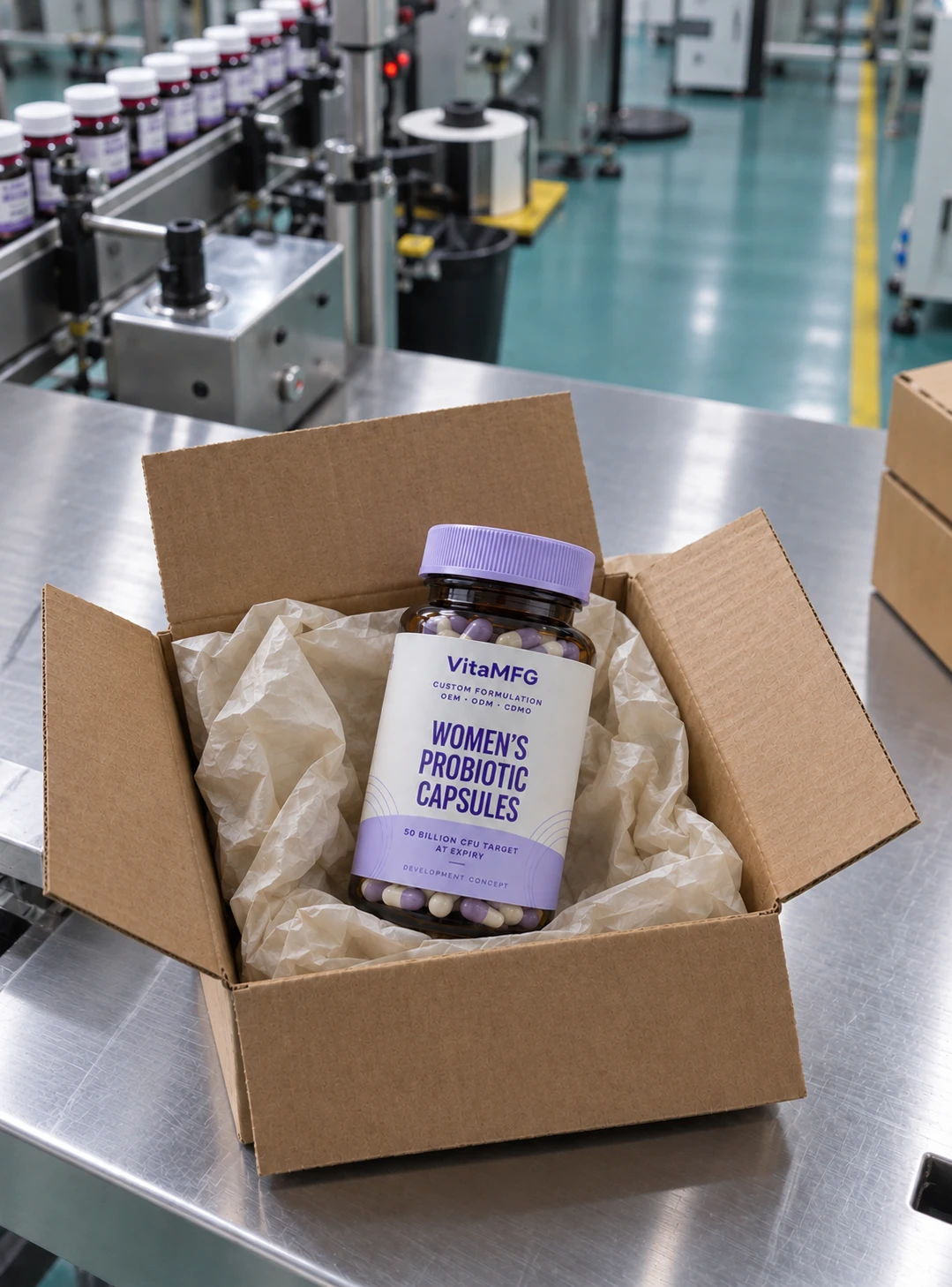
VitaMFG develops women's probiotic capsules for adult gut and women's-microbiome product lines. The current US-first concept targets 50 billion CFU at the end of shelf life in two delayed-release size 0 capsules, supported by 100 mg of cranberry extract and 100 mg of inulin or acacia prebiotic.
This is a feasibility-gated formula, not a finished claim. The specific strains, blend potency, stability-derived overage, cranberry PAC content, storage condition and shelf life must be locked before commercial approval. We connect strain identity, incoming potency, low-moisture processing, delayed-release performance and packaging data to the CFU value intended for expiry. The prebiotic is kept at an honest supporting dose, while urinary, vaginal and digestive claims are limited to what the selected strains and finished product can substantiate.

Why Choose VitaMFG for Women's Probiotic Capsules?
- CFU target defined at expiry rather than only at manufacture
- Genus, species and strain designation reviewed before formula approval
- Overage derived from strain-specific stability data, not a fixed assumption
- Cranberry PAC specification tied to a stated DMAC method
- Low-temperature, low-humidity filling and high-barrier packaging review
- Claim, warning and destination-market review included before commercial release
Women's Probiotic Capsule Product Directions
Start with the target consumer and evidence position. We then build the strain list, supporting ingredients, packaging and testing route around that decision.
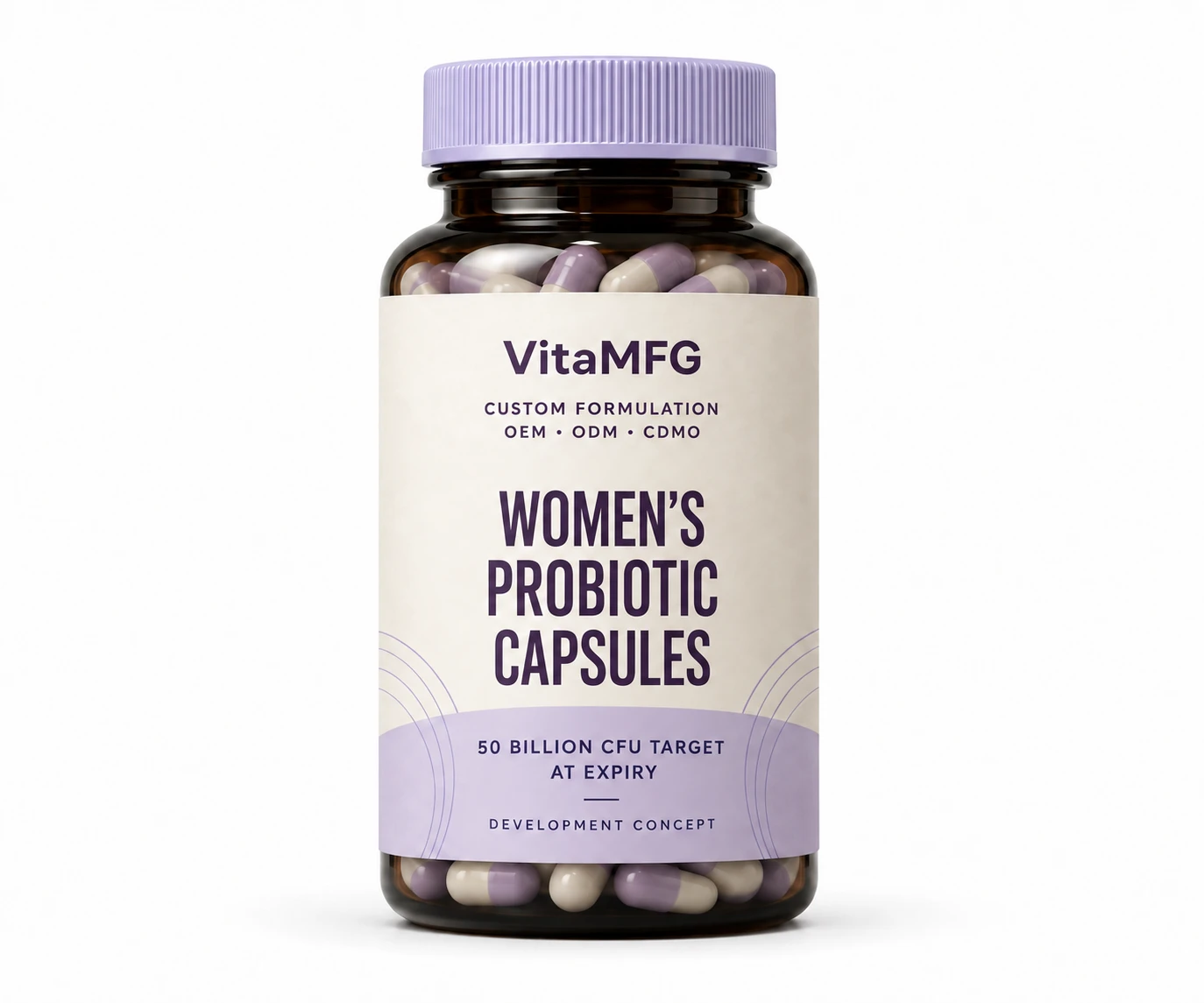
50 Billion CFU-at-Expiry Capsules
The flagship direction targets 50 billion viable organisms at the end of the approved shelf life, not only when the product is manufactured.
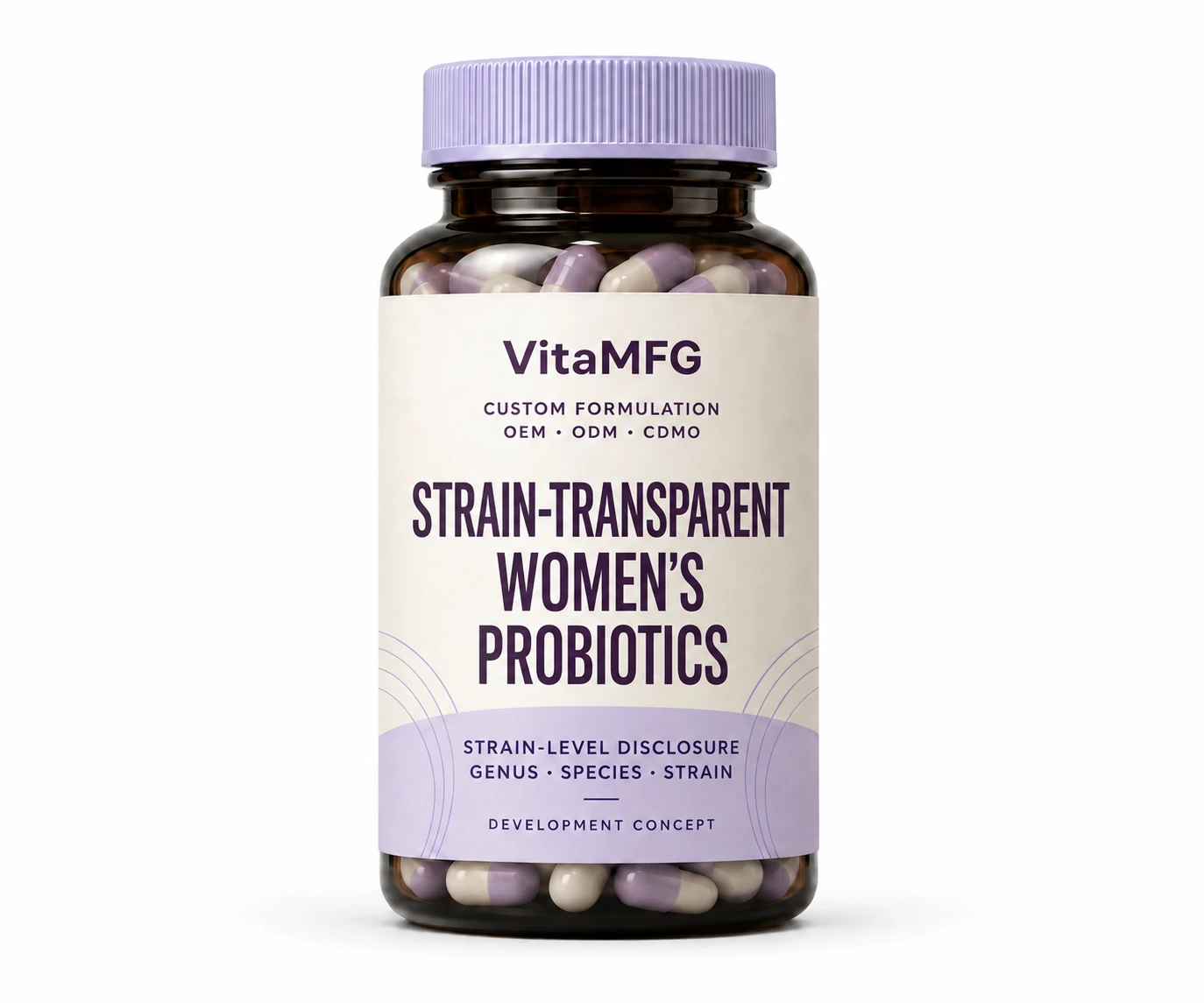
Strain-Transparent Women's Probiotics
A label-led route that states genus, species and strain designation for every organism included in the approved blend.
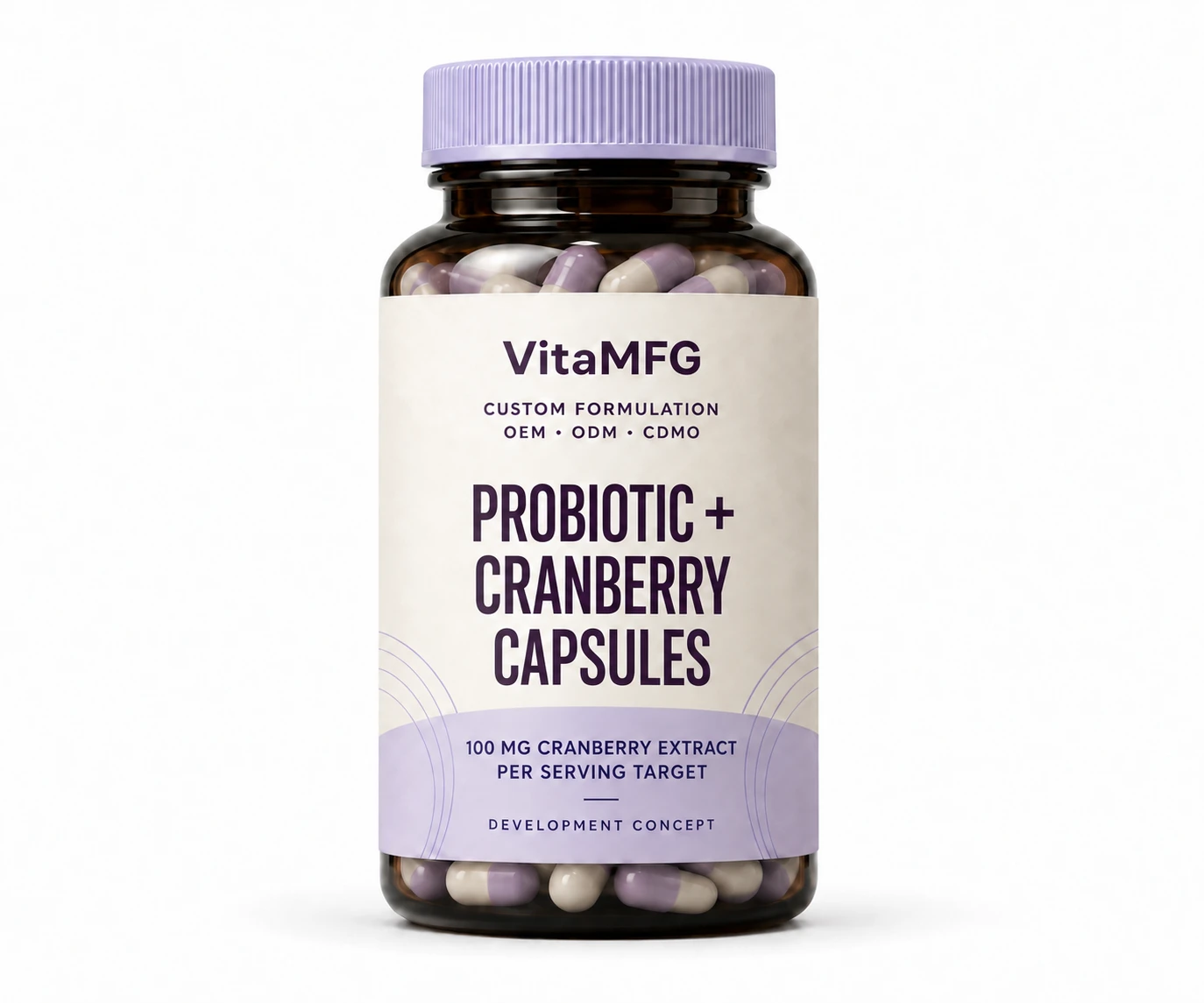
Probiotic + Cranberry Capsules
A women's-category concept combining the named probiotic blend with 100 mg of cranberry extract and a clearly defined PAC testing basis.
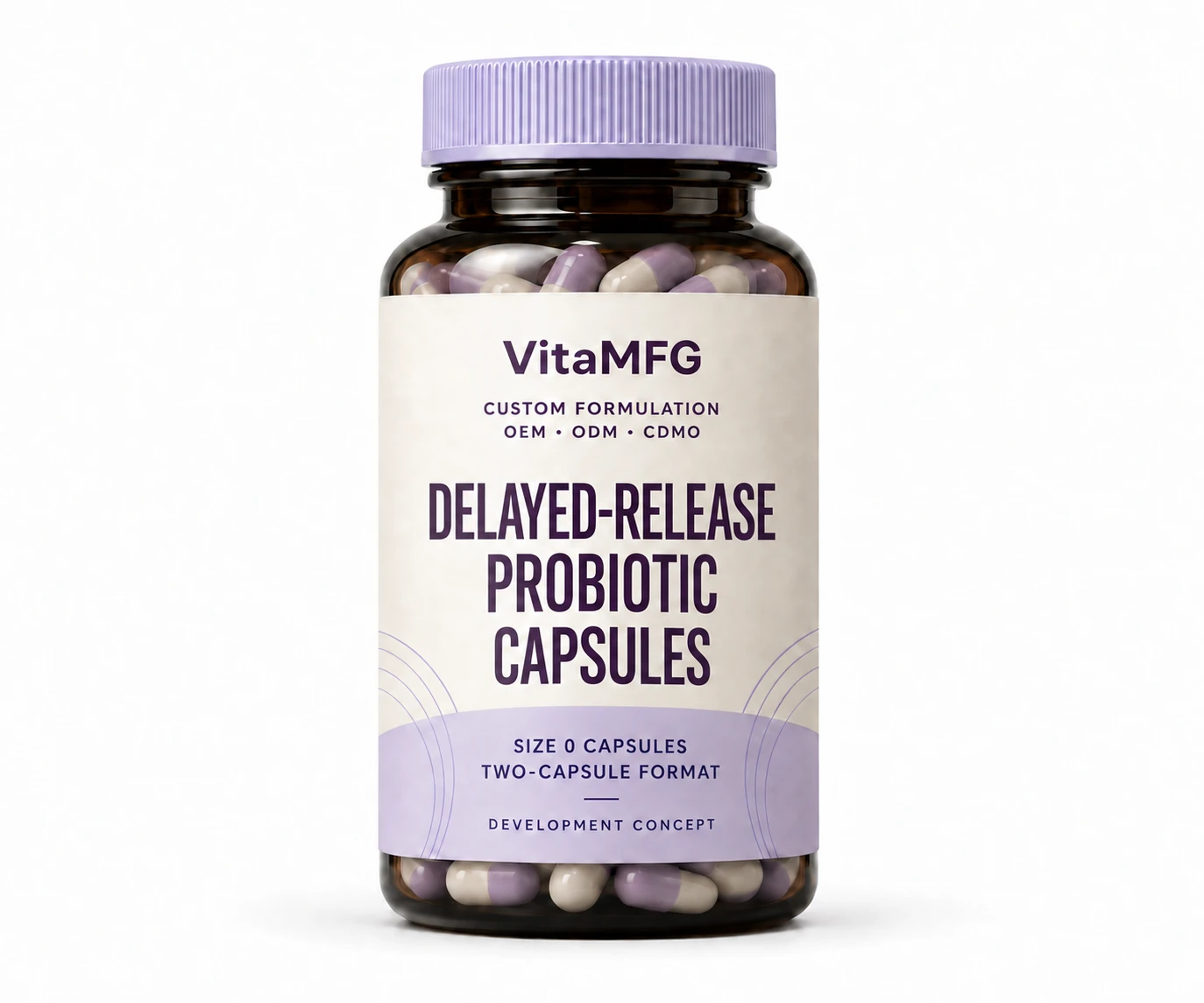
Delayed-Release Probiotic Capsules
A two-capsule format developed with delayed-release shells, subject to disintegration, moisture compatibility and finished-product performance review.
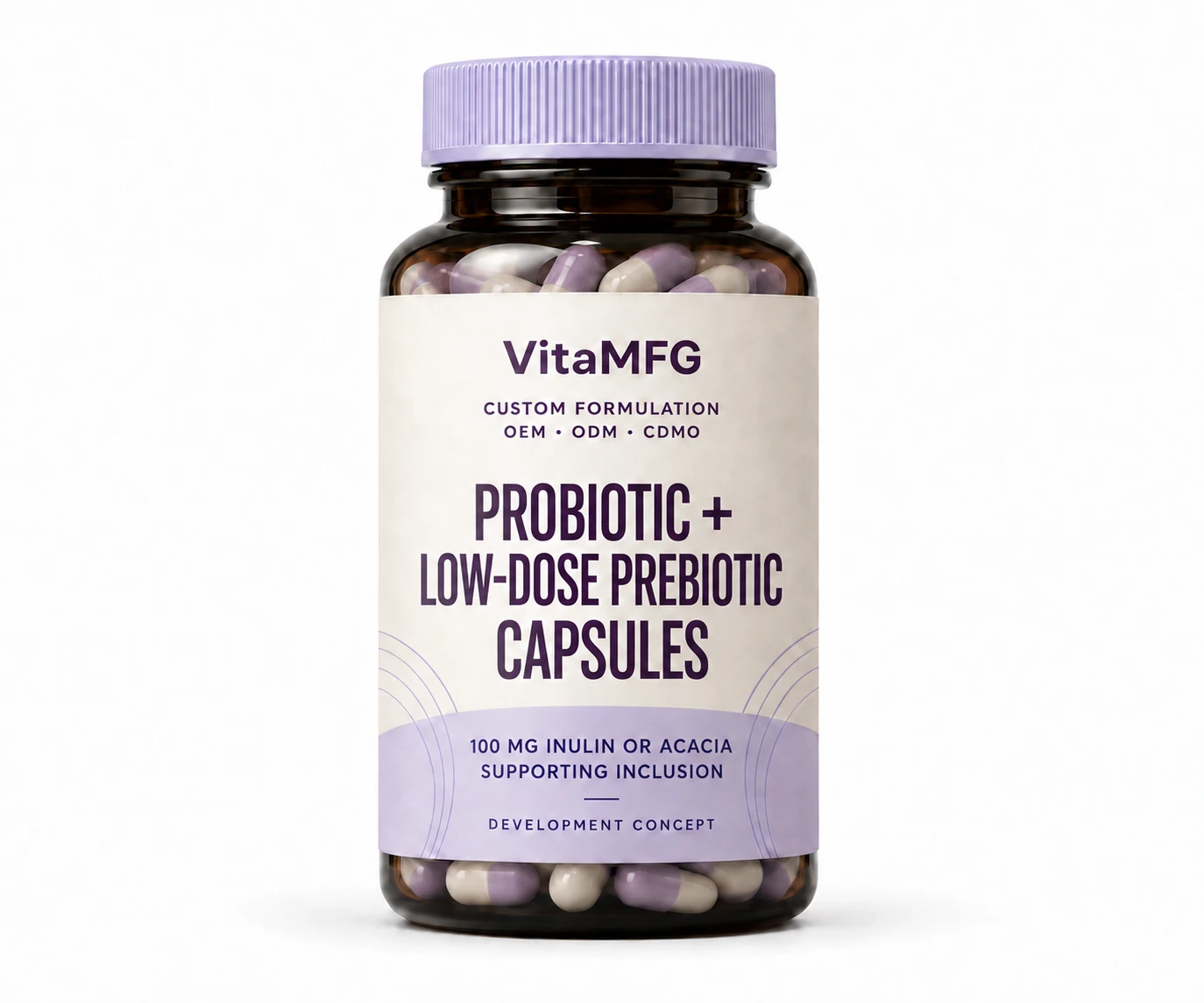
Probiotic + Low-Dose Prebiotic Capsules
A formula containing 100 mg of inulin or acacia as a supporting inclusion without presenting the product as a high-prebiotic or high-fiber supplement. A probiotic-prebiotic gummy format can move the prebiotic component to a larger 1 g target while shifting delivery from capsules to a chewable serving.
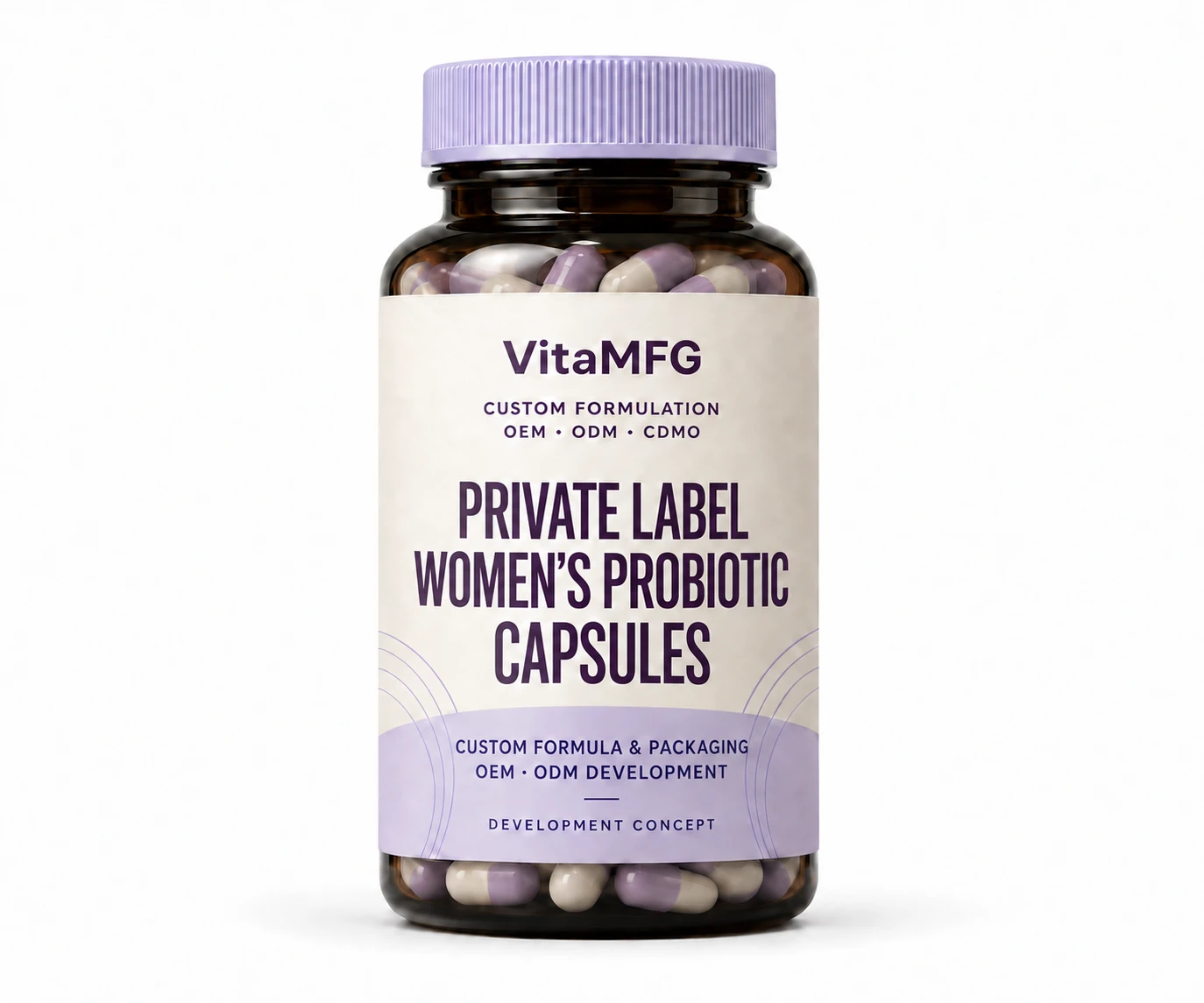
Private Label Women's Probiotic Capsules
An OEM/ODM route covering strain selection, supporting ingredients, capsule shell, packaging, stability, label review and commercial planning.
Product Advantages for Women's Probiotic Capsules
The product story is built around four facts that can be checked through the strain file, test plan and stability program.
50B CFU at Expiry
The development target applies to the end of the approved shelf life, when viability matters to the consumer.
Every Strain Identified
Genus, species and strain designations are disclosed individually instead of hiding the formula behind a total strain count.
Cranberry PAC Method Defined
The cranberry specification includes a declared PAC content and DMAC-based method before any PAC-related statement is approved.
Delayed-Release Format
Two size 0 capsules provide a practical platform for the live-culture blend and supporting ingredients, subject to feasibility testing.
Build the 50B Claim Backward
A 50-billion number at manufacture does not establish the count remaining months later. VitaMFG begins with the intended expiry claim, target shelf life and storage condition, then reviews each strain's incoming potency and stability data. The starting overage is calculated from those losses and checked in the complete formula. Identity, total viable count and applicable strain-level methods are defined before testing begins, so the label does not substitute a large CFU number for evidence about the organisms inside.

Protect Cultures from Moisture
Live cultures can lose potency through heat, humidity, oxygen and incompatible ingredients. Development therefore uses low-temperature, low-humidity handling and reviews water activity across the filled product. Delayed-release shells are compared for moisture transfer and disintegration. Aluminum-aluminum blister is the preferred development route; a high-barrier bottle with an appropriate desiccant remains an alternative after stability and transport review. Packaging, storage wording and overage are approved from the same data set.

Resource Center
Catalog Download
Explore VitaMFG supplement formats and available private label development directions.
DownloadCertifications Download
Request applicable manufacturing-site, strain-supplier and quality-system documents for supplier review.
DownloadVideos
See the workflow from strain qualification and formulation through filling, inspection and packaging.
Watch VideoA Stability-Led Probiotic Development Route

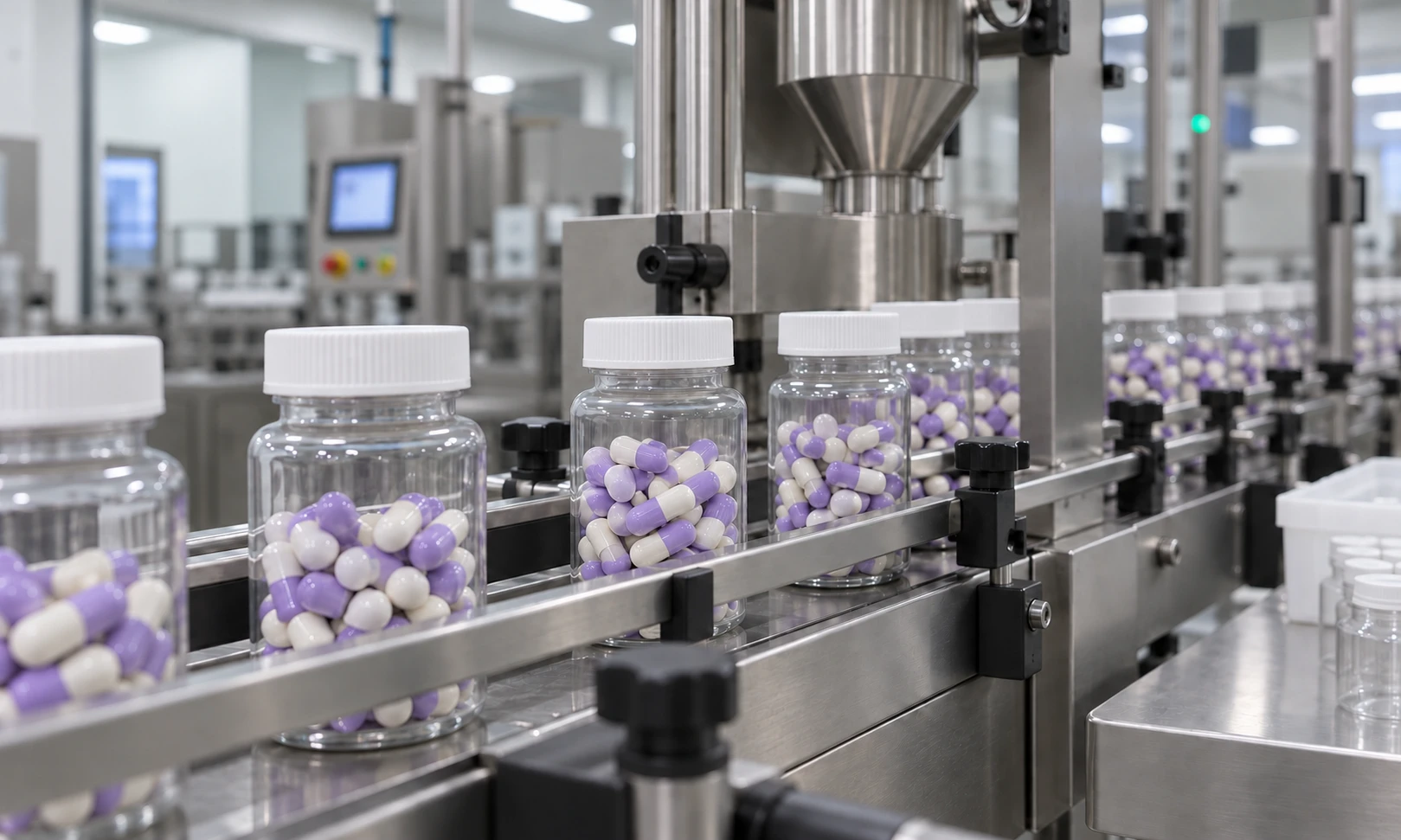
VitaMFG has more than five years of functional supplement development and manufacturing experience. For capsule projects, the team coordinates ingredient qualification, formulation, trial filling, analytical verification, packaging and commercial planning. The selected production site's current certification scope and quality documents are supplied during customer qualification rather than assumed from another dosage form.
Each probiotic project moves through strain and formula review, laboratory feasibility, initial testing, stability, pilot and commercial approval. Batch records, sampling positions and retained samples connect the approved formula to subsequent production. Capacity, MOQ and timing are confirmed for the selected capsule site, strain blend, packaging, stability program and destination market after the feasibility gate is passed.
Women's Probiotic Projects for Different Markets
The same shelf-life and strain-transparency platform can support several women's wellness positions without turning the product into a treatment claim.

Adult Daily Gut-Wellness Brands
Build a daily probiotic around named strains, a two-capsule routine and an expiry-based CFU target. Any digestive structure/function language is selected only after the exact organisms, dose and evidence are reviewed. The product page can still explain viability, storage and strain identity clearly before broader claims are considered.
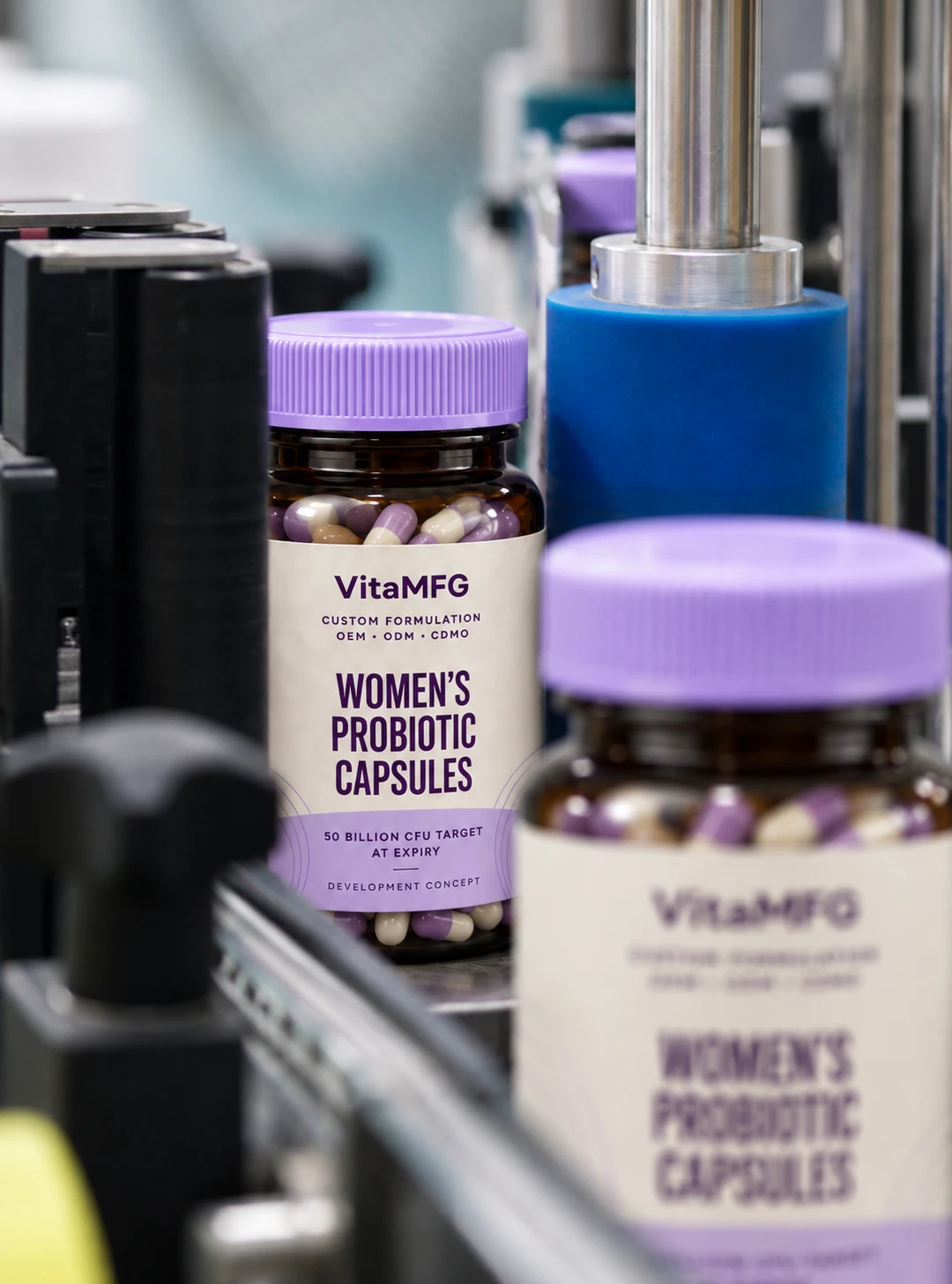
Women's Microbiome Product Lines
Create a women's-category formula with probiotics and cranberry while keeping urinary and vaginal disease language out of the sales story. Strain selection should follow the intended use and evidence, not simply the highest available CFU blend. Cranberry PAC content and test method remain visible as separate quality decisions.
Amazon and DTC Projects
Use the listing, label and FAQ to answer the questions online buyers ask: Are the strains named? Is 50 billion guaranteed at expiry? Does the product require refrigeration? How is it packaged? How much PAC does the cranberry provide? Consistent answers help the brand compete on verification instead of relying on an oversized CFU number alone.

Retail Private Label Projects
Start with the retailer's adult consumer, shelf-life target, storage environment, price architecture and packaging requirements. VitaMFG then reviews strains, supporting ingredients, capsule size, stability, claims and supply planning together. This gives buyers a clearer view of both the shelf story and the technical work required before regular replenishment.
What Consumers Expect from Women's Probiotic Capsules
Public category reviews show that capsule size, aftertaste, packaging convenience and refrigeration requirements shape the daily experience. These comments relate to third-party products; they are not reviews of a VitaMFG product and are not evidence of health effects.
Women's Probiotic Capsules Product Specifications
| Parameter | Development Specification | Customization / Notes |
|---|---|---|
| Product Type | Women's Probiotic Capsules | Private Label / OEM / ODM |
| Probiotic Target | 50 billion CFU at expiry per serving | Conditional on strain blend, stability, packaging and storage data |
| Strain Disclosure | Genus, species and strain designation required | Exact organisms and ratios remain to be selected |
| Overage | Stability-derived | No fixed overage before strain and finished-product data |
| Cranberry Extract | Target: 100 mg per serving | Botanical identity and extract specification require review |
| Cranberry PAC | Target to be confirmed | DMAC method and reference standard must be stated |
| Prebiotic | Target: 100 mg inulin or acacia | Supporting dose; not positioned as a major prebiotic claim |
| Serving Size | 2 capsules per day | Development baseline |
| Capsule Type | Delayed-release size 0 | Shell composition and performance require verification |
| Process Direction | Low-temperature, low-humidity blending and filling | Final route follows strain and shell compatibility data |
| Preferred Packaging | Aluminum-aluminum blister | High-barrier bottle plus desiccant is a stability-dependent alternative |
| Storage | Confirmed by stability study | Refrigeration or room-temperature wording is not assumed |
| Testing Direction | Strain identity, viable count, PAC, moisture, water activity, disintegration, microbiology and contaminants | Final methods follow formula and destination market |
| Claim Boundary | Supported strain- and product-relevant language only | No treatment of UTI, yeast infection, bacterial vaginosis or other disease |
| OEM/ODM | Supported after feasibility gate | Review → Trial → Initial testing → Stability → Pilot → Commercial approval |
Frequently Asked Questions
Start Your Supplement Manufacturing Project
Tell us what you want to manufacture — including dosage form, formulation requirements, packaging, target market, and expected volume. We'll review your project and recommend the next steps.
Share your project details — our team will review feasibility, process alignment, and next steps.