How to Convert a Capsule Formula Into a Gummy
Converting a capsule formula into a gummy does not mean placing the same powder blend into a sweet gel. Capsules and gummies use different amounts of water, different excipients, different processing conditions, and different unit capacities.
A capsule formula may contain bitter minerals, dry extracts, oils, hygroscopic ingredients, or a large active mass that was hidden inside an opaque shell. In a gummy, those materials influence taste, color, viscosity, gel formation, drying, texture, and stability.
The transfer should protect the meaningful product objective while redesigning the formula for the new delivery system.
Quick Answer
Rebuild the Serving Before Rebuilding the Formula
Use this sequence:
-
Confirm the active amounts and ingredient forms
-
Calculate the total raw-material mass per serving
-
Set the maximum gummies and target piece weight
-
Identify ingredients that are incompatible with heat, acid, water, or taste exposure
-
Select pectin or gelatin and the sugar or fiber system
-
Develop flavor, color, and texture at the full dose
-
Define finished-product specifications and testing
-
Validate commercial scale-up and packaging
Some capsule formulas transfer with limited changes. Others require a larger serving, lower dose, different material form, removal of nonessential ingredients, or a move to soft chew, powder, jelly, or liquid.
Lock the Capsule Product Facts
Do Not Transfer From the Marketing Label Alone
Collect the quantitative formula and approved material specifications, not only the Supplement Facts panel.
Confirm:
-
Amount of each active per serving
-
Active chemical or botanical form
-
Material assay and carrier
-
Capsules per serving
-
Capsule fill weight
-
Excipients and their purpose
-
Target market and claims
-
Current tests and specifications
-
Known stability or complaint issues
The weight declared on the label may represent elemental mineral, standardized marker, or vitamin activity rather than the weight of raw material required.
The complete material mass is the starting point for gummy capacity.
Calculate Gummy Capacity
The Gummy Base Needs Space
A finished gummy includes active materials plus sweeteners or fibers, water, hydrocolloid, acids, flavors, colors, and process allowances.
Estimate:
-
Total active raw-material mass per serving
-
Desired gummies per serving
-
Proposed dry gummy weight
-
Active percentage of each gummy
-
Space remaining for a functional gel system
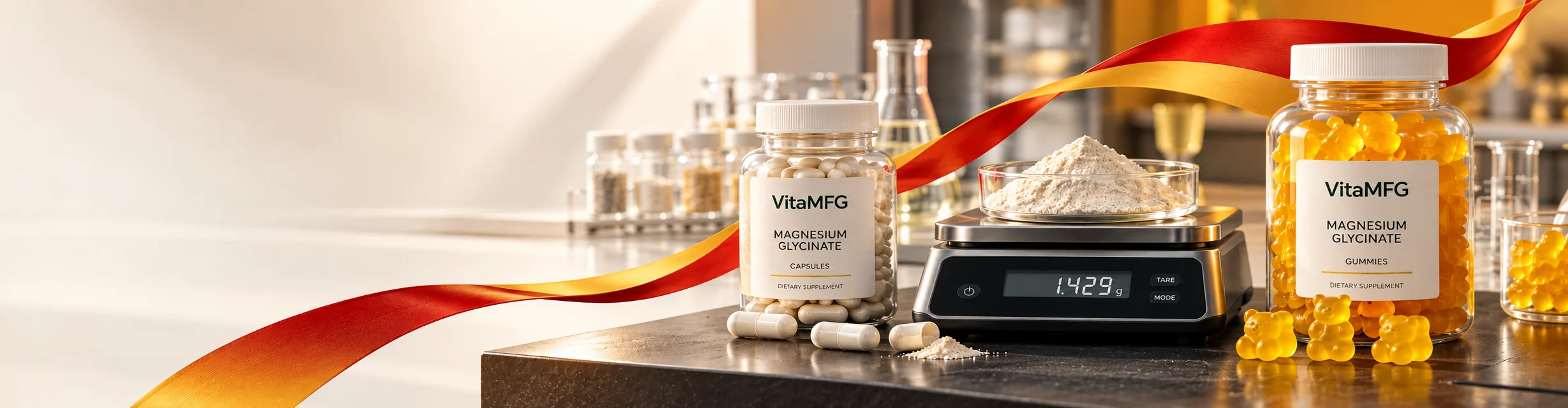
A two-capsule formula with a 1,400mg combined fill may not fit into two small gummies after taste masking and structure are included. The answer may be larger pieces or more gummies.
Do not quote a serving count before the manufacturer has reviewed the real materials and base.
Rank the Ingredients
Preserve the Hero Benefit Before the Label Decoration
Capsule formulas often contain many small ingredients added for marketing breadth. In a gummy, every material consumes capacity and can add taste, color, interaction, or testing complexity.
Classify each ingredient as:
-
Core: essential to the product promise
-
Supporting: valuable if technically compatible
-
Optional: removable if it compromises dose or experience
-
Incompatible: better delivered in another format
This ranking helps the technical team protect the product's purpose rather than reducing every active until the formula fits but no longer delivers a coherent serving.
Reassess Ingredient Forms
The Best Capsule Material May Not Be the Best Gummy Material
Capsules can tolerate powders that are insoluble, dark, odorous, or difficult to taste. Gummies expose those properties.
Alternative material forms may improve dispersibility, flavor, color, or stability, but they can change assay, cost, origin, claims, and regulatory status.
Review:
-
Solubility and suspension behavior
-
Particle size and grittiness
-
Heat and acid sensitivity
-
Moisture sensitivity
-
Flavor and odor
-
Color contribution
-
Material assay and input calculation
-
Supplier documentation
Any substitution should be documented and approved. “Same ingredient name” does not establish equivalence.
Evaluate Heat, pH, and Water Exposure
A Gummy Is a Wet Process and a Moist Matrix
Depending on the platform, gummy processing can expose ingredients to heat, acidic pH, water, oxygen, and hold time. The finished product retains moisture and continues changing during storage.
Sensitive vitamins, probiotics, enzymes, oils, botanical compounds, or creatine may require late addition, encapsulation, overage strategy, a different base, or another format.
Do not apply a universal safe pH or temperature to every active. Review published ingredient information, supplier data, process conditions, and finished-product stability together.
If an ingredient cannot reasonably survive the process and shelf life, removing it is more responsible than listing an unverified theoretical input.
Select the Gelling System
Pectin and Gelatin Create Different Design Windows
Pectin supports vegan and gelatin-free positioning and typically uses an acid-controlled set. Gelatin provides an elastic chew and different processing behavior.
The choice affects:
-
Process temperature and timing
-
pH and acid addition
-
Active compatibility
-
Texture and melting behavior
-
Drying and moisture
-
Transport conditions
-
Consumer positioning
Neither is universally better. The selected system must carry the target active load and remain stable in the commercial package.
Redesign the Excipient System
Capsule Excipients Do Not Simply Transfer
Capsule flow aids and lubricants may be unnecessary or undesirable in a gummy. The gummy needs its own structure and sensory system.
The new formula may use:
-
Sugar, glucose syrup, polyols, or soluble fibers
-
Pectin, gelatin, or another hydrocolloid
-
Acids and buffers
-
Flavors and masking components
-
Colors
-
Oils, waxes, or coatings
-
Water and process aids
Every addition should have a manufacturing or consumer purpose. Sugar-free conversion is a separate development problem because changing the solids system alters texture, water activity, sweetness, and digestive-tolerance considerations.
Build Taste Masking at the Full Dose
The Capsule Hid the Taste; the Gummy Must Solve It
Minerals, amino acids, botanicals, vitamins, and oils can produce bitterness, acidity, metallic notes, astringency, odor, or powder perception.
Flavor development should evaluate sweetness, acid profile, salt, aroma, color, texture, and aftertaste together.
Do not approve a flavored blank base and assume the active version will be acceptable. Do not approve a reduced-dose prototype. The sensory reference must represent the target formula, unit weight, and serving architecture.
Consumer testing should include the complete serving, not one gummy when the directions require four.
Define Physical Specifications
Gummy Quality Needs Measurable Attributes
In addition to active content and contaminants, specifications may include:
-
Unit weight and count
-
Appearance, flavor, and odor
-
Moisture and water activity
-
pH where relevant
-
Texture or firmness
-
Dimensions
-
Surface and sticking condition
-
Microbiological limits
-
Package and seal requirements
There is no universal water-activity or moisture target for every gummy. The acceptable window depends on the base, active load, texture, package, and shelf-life goal.
Plan Finished-Product Testing
Raw-Material Evidence Does Not Prove the Gummy
The analytical method must suit the gummy matrix. Sugars, fibers, acids, hydrocolloids, colors, flavors, and multiple actives can complicate extraction and measurement.
Define:
-
Which actives will be tested
-
Sample locations and number of units
-
Composite versus individual-unit approach
-
Method and matrix suitability
-
Reporting per gummy or serving
-
Release specification
-
Stability time points
For multi-active formulas, it may not be practical to test every ingredient in every batch. The manufacturer and brand should establish a justified specification and verification plan under applicable requirements.
Scale Up the New Formula
The Capsule's Manufacturing History Does Not Transfer
The gummy is a new product. It needs its own scale-up evidence.
Commercial equipment changes batch size, mixing, heat transfer, hold time, suspension, depositing pressure, line speed, drying, coating, and packaging.
Depending on risk, collect:
-
Batch and process records
-
Beginning-middle-end samples
-
Gummy weight distribution
-
Active-content results
-
Moisture and water-activity data
-
Texture and sensory observations
-
Yield and deviations
-
Packaging performance
A hand-made sample can establish feasibility. It cannot prove repeat commercial production.
Rebuild Packaging and Labeling
A New Format Creates New Product Facts
The gummy changes serving size, unit count, net quantity, other ingredients, directions, warnings, storage, and possibly claims.
Update the label only after the formula is sufficiently closed. Confirm bottle or pouch size, closure, liner, desiccant where appropriate, barrier, count, heat exposure, and transport conditions.
The capsule's shelf life and packaging data should not be copied automatically. The gummy requires product-specific stability in its intended commercial package.
When Not to Convert to a Gummy
A gummy may be the wrong format when:
-
The active mass requires an impractical serving
-
Several ingredients are highly heat-, acid-, or moisture-sensitive
-
Taste masking creates excessive sweetness or acidity
-
The required dose produces unacceptable texture
-
The formula depends on incompatible oils or minerals
-
The consumer expects one small unit
-
Cost per meaningful serving becomes uncompetitive
Soft chew, powder, capsule, tablet, jelly, or liquid may protect the product objective better.
Conversion Checklist
-
Quantitative capsule formula and material assays obtained
-
Core and optional ingredients ranked
-
Gummy capacity calculation completed
-
Ingredient forms reviewed
-
Gelling and sugar system selected
-
Full-dose sensory sample approved
-
Finished-product specifications established
-
Test methods and sampling planned
-
Scale-up route defined
-
Gummy-specific package and label prepared
How VitaMFG Reviews Capsule-to-Gummy Projects
Preserve the Product Purpose, Then Re-Engineer the Delivery
VitaMFG reviews the capsule's active quantities, ingredient forms, assay basis, serving, target consumer, market, claims, and commercial objective.
The formula is then rebuilt around gummy capacity, active loading, heat and acid exposure, taste masking, gel structure, moisture control, finished-product verification, packaging, and scale-up.
Where the original capsule formula cannot fit a realistic gummy serving, the conflict is identified before sampling and alternatives such as soft chew, powder, jelly, or a simplified gummy are evaluated.
Frequently Asked Questions
Q1: Can every capsule formula become a gummy?
No. High active mass, poor taste, ingredient sensitivity, and incompatible materials can make the transfer impractical or commercially weak.
Q2: Can the Supplement Facts stay the same?
Only if the new gummy can deliver the same amounts and meet applicable requirements. Serving size, other ingredients, directions, net quantity, and claims will often change.
Q3: Is pectin better than gelatin for transfer?
Neither is universally better. Choose based on active load, process, pH, texture, market positioning, and stability.
Final Recommendation
Treat the Gummy as a New Product Development
A capsule-to-gummy transfer should preserve the meaningful dose and brand purpose while redesigning ingredient forms, excipients, serving architecture, sensory profile, testing, process, and package.
If you have the quantitative capsule formula and target gummy serving, VitaMFG can perform an initial format-transfer review before formal development.